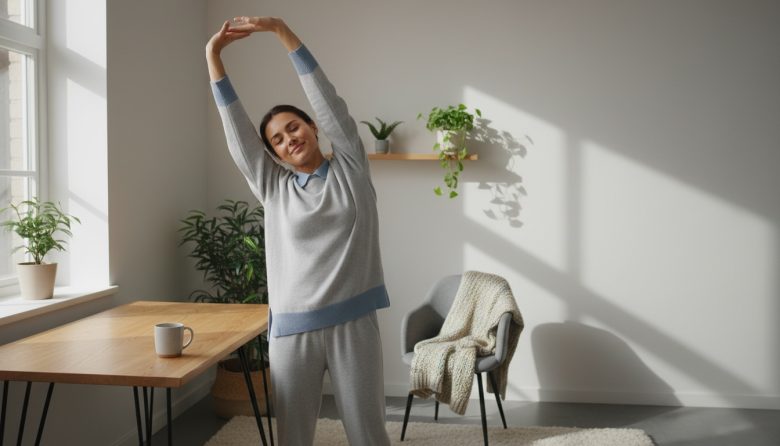
Picture this: You’re midway through a marathon of emails, shoulders creeping up toward your ears, lower back whispering complaints from hours glued to your chair. That familiar tension builds quietly—neck stiff from hunching over screens, wrists aching from endless typing, mind foggy amid back-to-back meetings. These five quick stretches offer real relief right at your desk, blending simple movement with steady breath to restore balance and ease.
I’ve felt it myself on long workdays, that pull between deadlines and physical strain. A quick shoulder unwind mid-call sharpens focus, while a seated twist after lunch grounds scattered thoughts. These moves aren’t about perfection; they’re practical tools to weave calm into chaos, easing knots and clearing mental fog. Expect benefits like looser muscles, deeper breaths, and renewed energy without leaving your workspace.
We’ll cover how these stretches reconnect mind and body, slot them into your daily rhythm, and detail each one in a handy table. Plus, tips to keep it simple and build lasting habits. Ready to try? These take under a minute each, perfect for busy schedules.
Long desk hours often leave us feeling disconnected—tight hips signal racing thoughts, clenched jaw hints at stress overload. Simple stretches bridge that gap, turning physical release into mental clarity. For instance, pairing a neck glide with slow breaths can quiet inner chatter during a tense project review.
Reconnect Mind + Body When Desk Life Pulls You Apart
Tight muscles don’t just ache; they mirror a scattered mind, pulling focus from tasks at hand. Notice how shallow breaths tighten your chest during deadlines? A quick stretch invites deeper inhales, grounding you in the moment with warmth spreading through limbs.
Take shoulder rolls: As you circle them back, feel breath expand, thoughts settle. This duo sharpens concentration for that next report. Real life? During a team call, I roll shoulders while listening—sudden calm, ideas flow clearer.
Or try wrist releases paired with a 10-second breath hold. Tension in hands often ties to overthinking; releasing both eases grip on worries. Office example: Mid-spreadsheet, stretch wrists, hold breath gently—mind quiets, errors drop. These pairings build resilience, one breath at a time.
Movement cues your body to unwind, signaling safety to your nervous system. Breath anchors it, preventing rebound tension. Over days, this habit fosters steady balance amid work demands.
Weave Stretches into Your Daily Rhythm
Your workday has natural pauses—use them for stretches that match the moment. Mornings call for gentle wake-ups like a seated spine twist to loosen overnight stiffness before emails pile up. Feel the subtle shift as spine elongates, breath steadies.
Midday dips, post-lunch slump? Wrist releases revive tired hands from typing marathons. Pair with a walk to the kitchen for hydration—simple boost. If no gym time easy home moves for busy schedules fit your routine, add these desk versions for seamless flow.
Evenings suit deeper unwinds, like chair forward folds to release the day’s hold. Before logging off, fold forward, let breath deepen—tension melts. This rhythm prevents buildup, keeping energy even.
Practical slots: Before first coffee (neck glide), after lunch (shoulder unwind), end-of-day (spine twist). Adjust to your flow—no rigid rules. Consistent slots build habit without effort.
Track one week: Note energy before and after. Mornings feel lighter, afternoons sharper. This integration turns stretches into natural anchors.
5 Desk Stretches to Restore Flow and Ease
These stretches use breath and gentle holds to spark warmth in tight spots, deepen inhales, and invite movement’s calm rhythm. No props needed—just your chair and a quiet breath. Scan the table below for quick picks by need and time.
Each targets common desk woes: neck strain, shoulder hunch, spine compression, wrist fatigue, hip tightness. Hold 20-30 seconds per side, breathe steadily. Preview: Neck Glide for early tension, Shoulder Unwind for mid-meeting relief.
| Stretch Name | Targets | Duration | Quick Steps | Best Rhythm Slot |
|---|---|---|---|---|
| Neck Glide | Neck, upper traps | 30 seconds/side |
|
Morning wake-up |
| Shoulder Unwind | Shoulders, upper back | 20 seconds x 3 |
|
Midday energy dip |
| Seated Spine Twist | Spine, mid-back | 30 seconds/side |
|
Post-lunch reset |
| Wrist Release | Forearms, wrists | 20 seconds/side |
|
Typing breaks |
| Chair Forward Fold | Hips, lower back, hamstrings | 45 seconds |
|
Evening unwind |
After the table, breathe into these moves fully. Example: During a slow meeting, Neck Glide eases screen-neck instantly—colleagues none the wiser. Shoulder Unwind mid-typing? Hands freer, focus returns.
Seated Spine Twist post-meal counters slouch, inviting fresh oxygen. Wrist Release saves from carpal creep; I do it hourly on heavy doc days. Chair Forward Fold caps the day, melting accumulated pull.
Tips: Move slow, no bounce—let warmth build naturally. If tight, shorten holds. Pair with desk posture checks: Feet flat, screen eye-level. Real routine: Set phone reminders for slots, track relief in notes.
Combine for flow: Morning Neck Glide + Midday Wrists = sustained ease. Office worker shared: “Twists ended my back twinges.” Adapt to you—consistency trumps intensity.
Breath is key: Inhale length, exhale release. Feel grounding spread. These build resilience against desk drain.
Keep It Simple: One Stretch to Cut Overwhelm
Don’t tackle all five today—pick one to sidestep pressure. Neck Glide shines for starters: Quick, subtle, big payoff on tension. Do it next break, notice the shift.
Overwhelm fades with no-fuss starts. Tomorrow, add Shoulder Unwind if wrists feel ok. This layers calm without rush.
Choose one moment today to practice: That pause before your next task. Simple integration sparks lasting rhythm. Feel the ease build naturally.
Feel the Difference: Steady Practice Builds Balance
Days turn to weeks, stretches weave into habit—shoulders stay open, breath deeper, mind steadier. Office life softens: Fewer aches, sharper afternoons. One user noted: “End-of-day energy doubled.”
Complement with mindful meals; when picking how to pick better options at fast food spots during rushes, pair a quick stretch for full recharge. Or unwind evenings with simple evening wind-down for busy parents after desk hours.
Balance emerges from calm repetition, not force. Your body thanks the rhythm—grounded, flowing through workdays.
Frequently Asked Questions
Do I need any equipment for these stretches?
No equipment required—these rely on your chair and desk for support, making them fully portable across offices, home setups, or coffee shops. Everything stays subtle and contained. Start right where you sit.
Are these safe if I’m new to stretching?
Yes, designed for beginners with gentle holds and no deep bends—move only to comfortable stretch, never pain. Ease in slowly, use breath as guide. If any discomfort, shorten or skip; consult a doctor for injuries.
How often should I do them during a workday?
Aim for one every 1-2 hours to preempt tension without flow breaks—fits naturally around tasks. Even two or three daily yield big shifts. Listen to your body; more if desk-bound heavily.
Will they actually help with back pain from sitting?
Many find relief targeting spine and hips, like Seated Twist and Forward Fold, easing compression over time. Pair with posture awareness—shoulders back, core light engage—for amplified results. Track progress weekly.
Can I do these in a shared office?
Absolutely discreet—motions are small, chair-based, ideal for open plans or calls. No one notices Neck Glides or Wrist Releases amid typing. Practice builds confidence in any space.