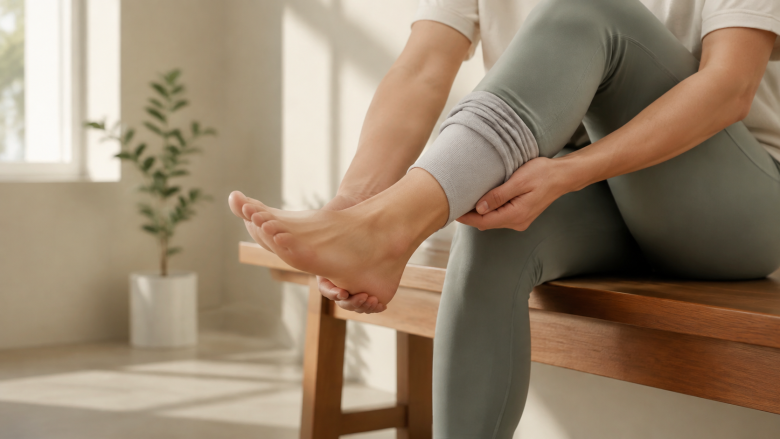
My Plantar Fasciitis Wake-Up Call
When I first felt that stabbing heel pain in the morning, I did what most people do: I looked up "plantar fasciitis stretches" and found a list of aggressive calf stretches. I pulled my toes back hard, held for 30 seconds, repeated. Within a week, my pain got worse. I learned the hard way that more is not better when it comes to this condition.
What finally cured my plantar fasciitis wasn't a heroic stretching session or a fancy gadget. It was a shift to gentle, frequent movement throughout the day, combined with the humble sock trick. If you're struggling with heel pain, I want to show you why less really is more, and how to apply this philosophy to your own recovery.
Why Aggressive Stretching Can Worsen Plantar Fasciitis
Most people think the plantar fascia needs a good stretch to loosen up. That's the worst thing you can do. The plantar fascia is a thick band of tissue, not a rubber band. When it's inflamed, aggressive stretching creates micro-tears and increases inflammation. The pain you feel after stretching is a sign you're causing damage, not healing.
The American Academy of Orthopaedic Surgeons notes that overstretching can irritate the fascia further. Think of it like a rope fraying at the ends - you don't pull harder on a frayed rope; you handle it gently.
So what's the worst thing you can do? A long, intense calf stretch first thing in the morning, before any blood flow has reached the area. That's a recipe for tearing tissue. Instead, you want to warm up with micro-movements and gradually introduce gentle tension.
The Gentle Movement Philosophy: Micro-Movements Over Marathon Stretching
The core idea is simple: your plantar fascia responds to frequent, low-intensity movement, not occasional high-intensity stretching. This is the daily mobility practice that heals. You're not trying to force the tissue to lengthen; you're encouraging blood flow, synovial fluid circulation, and muscle activation.
Foot Circles and Ankle Pumps: The 2-Minute Habit
Start with simple ankle pumps - point your toes away, then pull them toward you. Do this while sitting at your desk or lying in bed. Aim for 20 repetitions each direction, twice a day. Then move to foot circles: rotate your ankle clockwise and counterclockwise. These movements don't stretch the fascia aggressively but they mobilize the ankle joint and improve circulation.
I keep a timer on my phone for every 90 minutes of sitting. When it goes off, I do 10 ankle pumps and 10 foot circles. It takes less than two minutes but makes a huge difference. The key is consistency, not intensity.
Towel Scrunches and Marble Pickups: Building Intrinsic Strength
Instead of stretching, focus on strengthening the small muscles in your foot. Place a towel on the floor and scrunch it toward you with your toes. Do 20 reps, rest, then repeat. If you have marbles or small objects, pick them up with your toes and drop them into a bowl. These exercises activate the intrinsic muscles that support the arch, taking pressure off the plantar fascia.
I was skeptical at first - how could a towel scrunch help? But after two weeks of daily practice, my arch felt more stable. The pain decreased because the muscles were doing their job instead of letting the fascia take all the load.
Calf Stretching Done Right: Short, Frequent, and Pain-Free
Calf tightness is a major contributor to plantar fasciitis. But you don't need a 60-second static stretch. Instead, use a short, frequent approach. Stand with your hands against a wall, one foot back, and gently bend the front knee. Hold for 10 seconds, then release. Repeat 5 times on each side. Do this several times a day, but never to the point of pain.
The key is to stretch the calf without pulling on the plantar fascia. When you stretch your calf, you're also pulling on the Achilles tendon, which connects to the fascia. So keep the stretch gentle and brief. If you feel a sharp heel pain, you've gone too far.
The Sock Trick: How a Night Splint Works (and Why It Matters)
The "sock trick" is a simple but effective device: a night splint that keeps your foot in a neutral or slightly dorsiflexed position while you sleep. It prevents the plantar fascia from shortening overnight, so you don't wake up with that excruciating first-step pain.
I used a commercial night splint, but you can also make a DIY version with a sock and a towel. Wrap a towel around your foot and pull your toes toward your shin, then secure with a loose bandage. The goal is to hold a gentle stretch for hours, not a forceful one.
What is the sock trick exactly? It's the practice of wearing a night splint - a soft brace that looks like a sock with a strap - to maintain a slight stretch on the plantar fascia and Achilles tendon overnight. Studies show that night splints can reduce morning pain significantly. According to a review in the Journal of the American Osteopathic Association, night splints are a conservative treatment with good evidence for plantar fasciitis.
I'll admit, sleeping with a splint took about a week to get used to. But the difference in my morning pain was dramatic. Instead of hobbling to the bathroom, I could walk with just a mild stiffness that faded within a minute.
Root-Cause Approach: Foot Strength, Calf Tightness, and Gait
Gentle movement isn't just about the foot. It's about addressing the root causes: weak intrinsic foot muscles, tight calves, and poor gait mechanics. If you only treat the symptom (heel pain), you'll likely see a recurrence.
Strengthening the Arch and Toes
Your arch is like a suspension bridge. If the cables (muscles and tendons) are weak, the bridge sags and puts stress on the foundation (plantar fascia). To strengthen the arch, practice short-foot exercises: sit barefoot, place your foot flat, and slide your heel toward your toes while keeping your toes on the ground. This shortens the arch without curling your toes. Hold for 5 seconds, release, repeat 10 times.
Also, try toe spreads: spread your toes as wide as possible, hold for a few seconds, then relax. This helps improve the neuromuscular control of your foot. I do these while watching TV. It's a passive way to build strength.
Addressing Calf Tightness Without Overstretching
Calf tightness is often a result of overworked muscles from poor gait or unsuitable footwear. Instead of just stretching, consider foam rolling the calf gently. Roll from the Achilles up to the knee, spending 30 seconds on any tender spots. But avoid rolling the plantar fascia itself - that can be too aggressive for the inflamed tissue.
Another technique is to use a massage ball on the calf while sitting. Apply light pressure and move slowly. The goal is to relax the muscle, not to force it to lengthen. Remember, tight calves can be a symptom of weakness in the glutes or core, so incorporate gentle glute exercises like clamshells or bridges.
Gait and Footwear: The Hidden Factors
How you walk matters. Many people with plantar fasciitis have a gait where they roll their foot outward (supination) or have a high arch. This puts uneven pressure on the fascia. A simple assessment: look at the soles of your old shoes. If they wear out on the outer edge, you're supinating.
Consider supportive shoes with a firm heel counter and good arch support. Avoid walking barefoot on hard surfaces, especially in the morning. I switched to a pair of clogs with arch support for indoor use, and it made a noticeable difference. Also, check your shoes' mileage - if they're over 500 miles, replace them.
A Daily Gentle Movement Routine: 10 Minutes That Actually Help
You don't need a 30-minute workout. This is a daily mobility practice, not a gym session. Here's a simple 10-minute routine I've developed and refined over months.
Morning Routine (Before Getting Out of Bed)
Before your feet touch the floor, do 10 ankle pumps and 10 foot circles with each foot. Then gently pull your toes toward your shin using your hand (not a strap) and hold for 10 seconds. This warms up the fascia without a sudden load. Then, while sitting on the edge of the bed, place your feet flat on the floor and do 10 short-foot exercises.
This takes about 3 minutes. I found that doing this before standing eliminated that brutal morning pain. It's like telling your fascia, "We're going to move now, but gently."
Midday Micro-Movements (At Your Desk)
Set a reminder every 90 minutes. Stand up and do 10 calf raises (holding onto a desk for balance). Then do 10 towel scrunches if you have a towel nearby, or just wiggle your toes and roll your ankle. The key is to break up prolonged sitting or standing.
If you're on your feet all day, take mini-breaks to sit and do foot circles. I keep a small ball under my desk and roll it under my foot for a minute - that's a gentle massage, not a deep-tissue assault.
Evening Routine (Before Sleep)
After dinner, spend 5 minutes on gentle stretching. Sit with one leg extended, loop a towel around the ball of your foot, and gently pull toward you. Hold for 15 seconds, release, repeat 3 times. Then do side-lying leg lifts to activate your glutes - this takes pressure off your calves.
Finally, put on your night splint. If you're using the DIY sock method, make sure it's not too tight - you want a gentle pull, not a tourniquet. This routine helps you sleep better and reduces next-morning pain.
For a structured progression, check out our 30-Day Gentle Movement Plan for Beginners - it's designed to build these habits gradually.
What Finally Cured My Plantar Fasciitis? (Personal Journey)
I struggled for eight months before I found the gentle approach. I tried aggressive stretching, new running shoes, orthotics, and even a cortisone shot. Nothing worked long-term. The turning point was when I stopped trying to "fix" it and started listening to my body.
I realized that my heel pain was a sign of overuse, not tightness. My calf muscles were tight because they were weak and overworked. So I shifted to strengthening my feet and glutes, and I made gentle movement a habit. I did the micro-movements every single day, even when I didn't feel pain. Within three weeks, the pain faded to a dull ache. By two months, it was gone.
The fastest way to fix plantar fasciitis isn't a magic exercise - it's consistency with gentle, daily movement. There's no quick fix, despite what some gurus claim. But if you commit to this philosophy, you'll see results faster than you think. I remember the first morning I stepped out of bed without pain - it was a small victory, but it felt huge.
Common Mistakes and Edge Cases
Even with gentle movement, you can make mistakes. Here are the ones I see most often:
- Doing too much too soon: Even gentle exercises can aggravate if you do 100 reps on day one. Start with 10 reps and increase gradually.
- Ignoring hip and glute strength: Weak glutes cause your feet to overpronate, which increases tension on the plantar fascia. Add glute bridges and clamshells to your routine.
- Wearing unsupportive footwear around the house: Slippers or bare feet on hard floors are a recipe for pain. Invest in supportive indoor shoes.
- Stretching the plantar fascia directly: The plantar fascia is not meant to be stretched aggressively. Instead, focus on calf and Achilles stretches, and only gently.
Edge cases: If you have diabetes, peripheral neuropathy, or a history of heel surgery, consult your doctor before starting any new exercise. Also, if your pain is sharp and persistent despite gentle movement for two weeks, see a podiatrist - you may have a heel spur or a tear.
When to See a Professional (and What to Expect)
Gentle movement works for most people, but sometimes you need extra help. If your pain lasts more than six weeks despite consistent daily mobility, or if it's severe enough to impair walking, see a physical therapist. They can design a personalized program that addresses your specific gait and strength deficits.
A physical therapist might use techniques like dry needling, manual therapy, or ultrasound, but they'll also teach you proper movement patterns. In my case, a PT diagnosed a tight Achilles and weak hip abductors. We worked on those with gentle exercises, and it complemented my home routine.
Don't be afraid to ask about night splints - many PTs recommend them as part of a comprehensive plan. And if you're overweight, weight loss can significantly reduce pressure on your feet. According to the CDC, even a 5% weight loss can reduce joint pain.
Final Thoughts: Less Is Truly More
Plantar fasciitis is a stubborn condition, but it's not a life sentence. The gentle movement philosophy - short, frequent, pain-free exercises - is the most sustainable way to heal. You don't need to grit your teeth through painful stretches. You need to move your feet, toes, and ankles regularly, strengthen your arches and glutes, and give your fascia a break with a night splint.
When I stopped forcing my body and started listening to it, everything changed. The pain didn't vanish overnight, but it steadily decreased. Now, months later, I still do my micro-movements every day, not because I'm in pain, but because it keeps my feet healthy.
So, what's the fastest way to fix plantar fasciitis? There isn't a magic pill. But the fastest real path is to start gentle movement today, commit to it daily, and trust the process. Your feet will thank you.