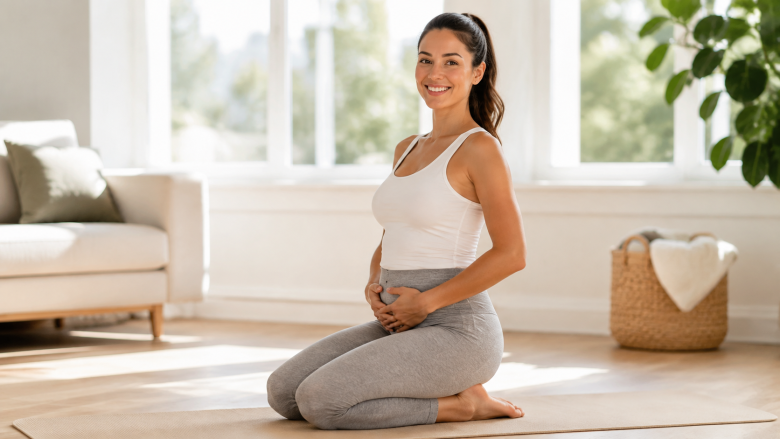
Why Your Core Feels Like It Gave Up (And Why That's Normal)
The first time I tried to roll out of bed after my daughter was born, I literally had to grab the headboard and heave myself upright. My core felt like a deflated balloon - no tension, no support, just a hollow space where my abs used to be. I remember thinking, "Did I lose all my strength permanently?"
Here's what I learned: your core doesn't "give up" after pregnancy - it fundamentally changes. The abdominal muscles stretch to accommodate your growing baby, the connective tissue between them (the linea alba) thins, and your pelvic floor takes on significant load. According to the World Health Organization, pregnancy and childbirth place unique physiological demands on the body that require specific recovery strategies.
Most people don't realize that the feeling of weakness isn't just about muscle size. It's about coordination. Your brain and your deep core muscles - the transverse abdominis, pelvic floor, and multifidus - have essentially lost their communication pathway. They need to relearn how to work together, not just get stronger individually.
That's why gentle movement matters so much. You're not trying to "fix" a belly; you're rebuilding a functional support system for the real demands of motherhood.
The Emotional Side of Core Recovery: Fear, Frustration, and the Pressure to Bounce Back
When I was six weeks postpartum, I went to a postnatal yoga class. The instructor asked us to do a simple pelvic tilt, and I panicked. What if I made my diastasis recti worse? What if I hurt myself? That fear is incredibly common, and it's rarely addressed in exercise guides.
Gentle movement after pregnancy isn't just physical - it's emotional. You're navigating a body that feels unfamiliar, dealing with sleep deprivation, and carrying the weight of expectation (both societal and self-imposed) to "get your body back." That pressure is counterproductive.
The thing nobody tells you about: the fear of "doing it wrong" often causes more harm than any movement mistake. When you're tense and hesitant, you hold your breath and brace your shoulders, which increases intra-abdominal pressure and can actually worsen diastasis or pelvic floor issues. Learning to move with calm, focused breath is the first step to letting go of that fear.
So before we get to exercises, let's reframe the goal. This isn't a workout plan to "tone up." It's a tool kit for becoming a confident, capable mother who can pick up her baby, carry a car seat, and get off the floor without wincing.
Getting Started: The Breath That Rebuilds Everything
Every gentle core program after pregnancy starts with diaphragmatic breathing. It sounds too simple to matter, but it's the foundation for everything else. Here's why: your diaphragm, pelvic floor, and deep abdominal muscles work together like a piston. When you inhale, your diaphragm drops, your pelvic floor relaxes slightly, and your transverse abdominis lengthens. On exhale, the reverse happens - everything gently lifts and engages.
Most of us (especially after pregnancy) breathe shallowly into our chests, which bypasses this coordination. To retrain it, practice this:
- Lie on your back with knees bent, feet flat on the floor. Place one hand on your ribs, one on your lower belly.
- Inhale slowly through your nose, letting your ribs expand out to the sides (not just your belly pushing up).
- Exhale through your mouth, feeling your ribs soften and your deep belly draw inward, as if you're gently pulling a corset strings closed.
- Aim for 10 breaths, focusing on the exhale being twice as long as the inhale.
When I first tried this, I made a classic mistake: I sucked my belly in aggressively on the exhale, creating tension. That's not what we want. The movement should be subtle - a 20-30% engagement, not a full crunch. Think of it as a gentle hug from the inside.
C-Section Considerations
If you had a cesarean, your recovery adds another layer. The incision and the layers of tissue that were cut need time to heal, and you may have numbness or altered sensation around the scar. That's completely normal.
For c-section mamas, start by placing your hands gently over your scar during breathing exercises. This helps your brain reconnect with the area and reduces guarding (the tendency to brace and avoid using that region). You can also do "scar massage" (once your doctor clears you, usually after 6 weeks) to break up adhesions. But listen to your body - if anything feels sharp or pulling, back off.
Most importantly, never rush into deep core work after a c-section. Your abdominal muscles weren't stretched the same way as a vaginal birth, but the tissue trauma is real. Gentle, slow, and consistent will always beat aggressive and fast.
Gentle Core Exercises That Prepare You for Daily Motherhood
Now let's talk about specific movements. The key is to integrate them into your day, not just as a separate "workout." I'll show you how each exercise connects to a real parenting task.
1. Pelvic Tilts - For Getting Out of Bed
Lie on your back with knees bent. Gently tilt your pelvis upward (thinking of pressing your lower back into the floor) as you exhale, then release on the inhale. That's it. Do 10 reps.
This movement teaches your deep core to engage without straining. It's the same action you'll use when you roll to your side to get out of bed after nursing - a motion that usually feels impossible in the early weeks.
2. Heel Slides - For Lifting Baby Out of the Crib
Still lying down, extend one leg straight along the floor as you exhale, then slide it back in. Keep your lower back neutral - don't let it arch. Alternate legs, 8 per side.
Heel slides activate the transverse abdominis in a controlled range. This is the muscle that stabilizes your spine when you lean forward to pick up your baby from a low bassinet. The key is to move slowly and never let your belly bulge outward.
3. Dead Bug - For Twisting to Reach a Sippy Cup
This one looks more complex, but it's invaluable. Lie on your back, knees bent at 90 degrees, arms reaching toward the ceiling. On an exhale, lower your right arm overhead and extend your left leg toward the floor (without touching it), keeping your lower back pressed down. Inhale back to center, then switch sides. Do 6 per side.
Dead bug trains cross-body coordination - the exact pattern needed when you twist to grab something while holding your baby. Most people who attempt it after pregnancy find they have to modify: you can keep both feet on the floor and just move one arm at a time. That's fine. The goal is control, not range.
4. Bird Dog - For Carrying a Car Seat
Start on all fours, hands under shoulders, knees under hips. Exhale as you extend your right arm forward and left leg back, maintaining a flat back. Hold for 2 seconds, then return. Do 6 per side.
Bird dog challenges your posterior chain and deep core simultaneously. When you carry a car seat on one side, your core has to resist the asymmetric load. This exercise teaches you to stay stable without shifting your hips.
When I first tried bird dog at 8 weeks postpartum, I wobbled so much I nearly toppled over. But within two weeks, I could hold the position steadily. The progress was slow, but it translated directly to feeling more confident carrying my daughter in her infant seat.
5. Squat to Tap - For Picking Up Toys (and Babies) From the Floor
Stand with feet hip-width apart. Lower into a shallow squat, then as you come up, tap your right hand to your left shoulder (or just reach across). Alternate sides, 10 total.
This is a functional movement that combines a squat with a rotation. It mimics the motion of picking up a toy from the floor while holding a baby. The key is to keep your chest lifted and your core engaged, not to round your back.
If you have diastasis recti (abdominal separation), avoid any movement that causes your belly to bulge or cone. That includes full sit-ups and planks. Instead, stick to the exercises above, which are safe when done with proper breathing and control.
How Long Does It Take to Rebuild Your Core After Pregnancy?
This is the question every new mother asks, and the honest answer is: it varies - a lot. Some women feel their core strength returning within 6-8 weeks, while others take 6-12 months or longer. The timeline depends on factors like your pre-pregnancy fitness, delivery method, whether you had diastasis, and how consistently you practice gentle movement.
But here's what most experts agree on: the first 6 weeks are for healing, not training. After that, you can start gentle breathing and micro-movements. By 12 weeks, you can progress to more dynamic exercises, but always under the supervision of a pelvic health physiotherapist if possible.
I remember setting a goal to be able to do a full plank by 4 months postpartum. It took me 6 months. And that's okay. Rebuilding your core isn't a race - it's a gradual rewiring of your body's support system. The moment you stop comparing yourself to social media timelines, the more peaceful and effective your recovery becomes.
One thing that surprised me: even after my core felt "strong" again, I still had to consciously engage it when lifting my toddler. That's because functional core strength isn't just about static holding - it's about activation during real movements. That's why the exercises above are designed to be practiced in everyday contexts, not just in isolation.
Signals You're Overdoing It: When to Back Off and Seek Help
Gentle movement should never cause pain. But how do you know if you're pushing too hard? Your body has clear signals, and learning to recognize them is crucial.
- Pain in your lower back or pelvis - This often means your deep core isn't engaging properly and your spine is taking the load.
- A feeling of heaviness or pressure in your pelvic area - This could indicate pelvic floor strain. Stop immediately and consult a pelvic health physiotherapist.
- Bulging or coning in your abdomen - If your belly forms a tent shape when you do a movement, you're putting too much tension through your linea alba. Back off and reduce the range.
- Increased bleeding or unusual discharge - This is a red flag that you're doing too much, too soon. Rest and talk to your healthcare provider.
I learned this the hard way. At 10 weeks postpartum, I attempted a modified plank and felt a sharp pull in my lower abdomen. I ignored it and kept going, which led to a week of increased back pain. The lesson: your core is not a muscle to be "pushed through." It's a delicate system that needs patience.
If you experience any of these signals, don't just stop - seek professional guidance. A pelvic health physiotherapist can assess your diastasis, pelvic floor function, and give you a personalized plan. This is not a luxury; it's a smart investment in your long-term well-being.
The "Saggy Belly" Question: What Gentle Movement Can (and Can't) Do
Let's address the elephant in the room: the saggy belly. So many postpartum women search for "how to tone up a saggy belly" and feel disappointed when exercise alone doesn't deliver a flat stomach. Here's the truth: the sagging is often due to stretched skin and connective tissue, not just muscle weakness.
Gentle core movement can strengthen your underlying muscles, which may improve posture and give you a sense of "pulling in." It can also help your diastasis heal, which reduces the dome-shaped bulge that appears when you engage your abs. But it cannot tighten loose skin or remove excess fat. That requires time, and sometimes surgical intervention (which is a personal choice, not a necessity).
What gentle movement can do is help you feel more connected to your body, improve your posture, and reduce back pain - which are far more important than a flat belly. When you focus on function, appearance often follows as a bonus, but it shouldn't be the goal.
I still have a soft pouch and a C-section shelf. But I can lift my 20-pound toddler without fear, I can run after him at the playground, and I can get up from the floor easily. That's the victory. Your body has done an incredible thing; honoring it with gentle movement is the best way to rebuild your strength.
A Simple Daily Framework for Busy Moms
You don't need an hour-long workout. In fact, shorter, more frequent sessions are better for postpartum recovery. Here's a 10-minute daily routine you can do while your baby naps or plays beside you:
- Diaphragmatic breathing (2 minutes) - 10 slow breaths as described earlier.
- Pelvic tilts (2 minutes) - 15 reps.
- Heel slides (2 minutes) - 10 per side.
- Dead bug (modified) (2 minutes) - 6 per side.
- Bird dog (2 minutes) - 6 per side.
Do this every day, and you'll notice improvements in your posture and confidence within a few weeks. But remember: this is a foundation, not a magic solution. The real magic happens when you incorporate these movements into your daily life - when you engage your core as you lift your baby, when you breathe properly as you bend down.
For a more structured progression, check out our 30-Day Gentle Movement Plan for Beginners - it's designed to build your strength gradually, with a focus on functional movements that translate to real-life parenting.
Making Peace With Your Postpartum Body
At the end of the day, gentle core movement after pregnancy is not about reclaiming a pre-baby body. It's about reclaiming your confidence, your mobility, and your ability to care for your child without pain or fear. It's about showing up for yourself in the midst of the chaos, one breath at a time.
When you practice these movements, you're not just healing your core - you're healing your relationship with your body. You're learning to trust it again. And that trust will carry you through the endless nights, the heavy car seats, and the toddler chases.
Start where you are. Use your breath as your guide. And remember: every gentle movement you do is a step toward becoming the strong, capable mother your child already loves.