Picture this: it's mid-afternoon, and you're glued to your desk, shoulders tightening like a coiled spring. Your eyes strain against the screen glow, and a familiar fog settles in, making every keystroke feel heavier. Studies show prolonged sitting raises risks for back pain, fatigue, and even metabolic slowdowns, yet most desk jobs demand hours in that position.
As a busy professional juggling emails, meetings, and deadlines, fitting in movement often feels impossible. But here's the good news: you don't need a gym membership or extra hours. Simple, woven-in shifts restore your body's natural flow, easing stiffness without upending your day.
We'll explore practical ways to counter desk drag, from breath-tied stretches to rhythm-fitting routines. These steps draw from real routines of marketers and writers who reclaimed ease amid chaos. Let's reclaim your natural rhythm, one breath at a time.
Feel the Subtle Drag of Sitting – And Flip It with Everyday Shifts
Your body craves movement to keep blood flowing and joints loose, but hours at a desk create subtle tightness in hips and shoulders. Notice the cues: a foggy mind after lunch or warmth fading from your legs. These signals remind you that static postures disrupt your inner balance.
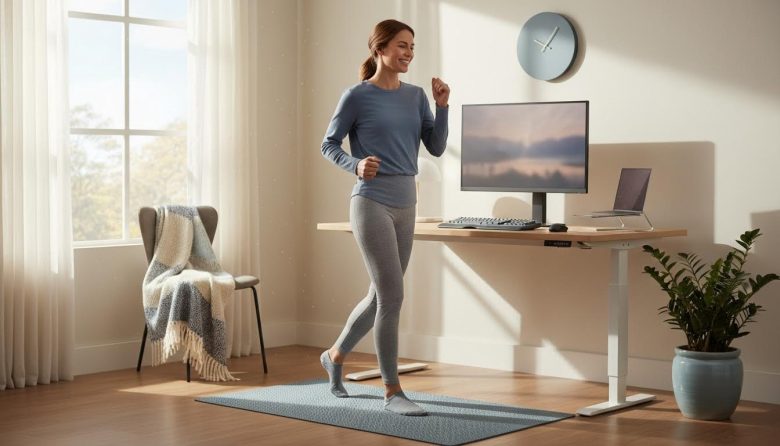
Take Sarah, a content marketer with back-to-back calls. Her afternoons dragged until she added micro-moves, like standing for emails. Suddenly, focus sharpened, and energy held steady through evening.
Flipping this starts with awareness. Tune into your breath's rise and fall, then layer in a shoulder roll. These everyday shifts ground you, paving the way for deeper habits without extra time.
Small changes compound. Research backs that breaking up sitting every 30 minutes boosts circulation more than one long walk. Ready to try? Let's link mind and body next for steady ease.
Mind + Body Links: Desk Anchors for Steady Focus and Ease
Movement isn't just physical; it quiets racing thoughts and steadies focus. A seated breath pause, for instance, loosens tight hips while clearing mental clutter. Inhale deeply, feel your belly expand, then exhale as shoulders drop—simple, yet it reconnects scattered energy.
Try shoulder rolls during calls: circle forward three times, then back, inviting warmth to your neck. This anchors awareness to your body, easing tension from endless scrolling. Pair it with a quick desk yoga stretch—extend arms overhead, arch gently back—for full upper-body release.
Relatable hack: during your next team meeting, do a one-minute body scan. Start at toes, wiggle them, move up to knees with subtle lifts, end at crown with a sigh. Thoughts calm as muscles unwind, proving mind-body links work in real time.
Mindful meals amplify this. Chew slowly, noticing food's warmth and texture, which grounds posture naturally. These desk anchors build resilience, transitioning smoothly into your daily flow.
Shape Your Daily Rhythm: Morning, Midday, Evening Flows That Fit
Build movement into your day's natural cadence: light mornings, steady middays, gentle evenings. Start with a grounding walk—five minutes around the block, arms swinging freely—to wake circulation before screens take over. This sets a balanced tone without rushing.
Midday calls for resets amid peak demands. Stand for breath breaks: rise, plant feet firmly, inhale for four counts, hold, exhale slowly. If Rushing Through Mornings? Simple Breakfast Swaps left you energized early, these midday stands sustain it.
Evenings unwind the day's hold. Opt for wall stretches: face wall, hands high, step back gently for chest opening. Feel shoulders soften as breath deepens, releasing built-up drag.
Compare Your Daily Active Flows
| Morning Starter | Midday Reset | Evening Unwind | Core Benefit | Time Needed |
|---|---|---|---|---|
| Gentle arm circles + deep breaths | Seated leg lifts | Wall-supported stretch | Boosts circulation | 2 minutes |
| Light block walk | Standing breath cycles | Seated forward fold | Wakes full body flow | 3-5 minutes |
| Neck rolls + shoulder shrugs | Ankle circles at desk | Legs-up-the-wall pose | Releases upper tension | 1-2 minutes |
| Cat-cow desk pose | Chair twists | Gentle hip opener | Improves spinal mobility | 2 minutes |
| Full-body shake-out | March in place | Screen-free sway | Shakes off stagnation | 1 minute |
| Side stretches | Desk push-ups | Child's pose adaptation | Balances posture | 2-3 minutes |
This table highlights quick picks—scan for what fits your schedule, like seated options for tight desks. Tie them to cues: coffee sip for morning, email ping for midday. Your rhythm emerges naturally, sustaining through long days.
For that post-lunch haze, integrate Feeling Sluggish After Lunch? Quick Energy Boosters with these resets. Flow leads to simplicity, as we'll see next.
Keep It Simple: One Gentle Habit to Ground Your Week
Overwhelm kills habits, so start with one: stand during your longest call, feeling feet ground warmly into the floor. This sensory cue—warmth rising—reminds without effort. No apps or trackers needed.
Time-saving hack: anchor to transitions, like post-meeting stretch. Checklist for success: pick cue, do move, note shift (e.g., clearer breath). Busy parents or execs thrive here—one habit snowballs.
Example: Mark, a project manager, chose ankle rolls at red lights (or desk waits). Weeks later, stiffness faded, proving small grounds big change. Reduce to this essence: one moment, repeated gently.
It fits any life, easing into weekly stamina without pressure. Real stories ahead show how.
Real Wins from Desk Days: Habits That Built Lasting Stamina
Meet Lisa, content strategist buried in revisions. Her screen wind-down—five neck rolls plus eye rests—cut evening headaches, building focus for next days. Small evenings compounded to full-week ease.
Tom, a freelance writer, wove movement meals: stand while eating lunch mindfully, noting flavors amid leg lifts. No more post-meal slump; stamina grew steadily. These routines mirror yours—adaptable, real.
Your version starts small: that breath pause or stand. Desk days transformed for them through consistency. Notice how one shift invites more, naturally.
As evenings streamline, even family time benefits—think less fatigue for home. Habits like these build lasting flow.
Pick one moment today: that breath, that stand. Notice the shift in warmth and clarity. Integrate gently, and watch your desk rhythm balance.
Frequently Asked Questions
Do I need extra time outside work hours for this?
No—these weave seamlessly into your desk rhythm, like a two-minute stand during email checks or breath pauses in meetings. They use existing transitions, adding no calendar burden. Busy schedules stay intact while movement accumulates naturally.
What if my desk setup has zero space for movement?
Seated options shine here: ankle rolls, breath ties, and subtle shoulder shrugs work in any chair. Focus on internal shifts like foot presses against the floor for grounding warmth. Space limitations become no barrier to daily flow.
Will tiny changes really counter eight hours of sitting?
Yes—studies from sources like the American Journal of Preventive Medicine show micro-breaks every 30 minutes improve circulation and posture more effectively than one long session. Tiny moves interrupt stagnation, fostering better overall balance. Results build quietly over weeks.
I'm too busy—how to make this a habit without failing?
Anchor to reliable cues, such as phone notifications or coffee breaks, pairing them with one move like a quick roll. Start single, track one week's wins mentally—no perfection needed. Natural momentum forms as the cue strengthens the link.
Does this replace gym time or formal exercise?
It complements perfectly, providing daily grounding to sustain energy for gym sessions or walks you enjoy. Desk habits prevent burnout, making bigger efforts more sustainable. Think supportive rhythm, not replacement.