Why Your Feet Are Swollen and Why Random Exercises Fall Short
When I first started working with clients who had chronically swollen feet, I made the mistake of prescribing ankle pumps right away. I thought I was helping. But for many, the swelling got worse or simply didn't budge. Here's what I learned: you can't drain a sink if the drainpipe is clogged. The drainpipe is your lymphatic system, and it runs through your hips and diaphragm.
Gentle movement for swollen feet isn't just about wiggling your toes. It's a sequence. It's about creating the conditions for fluid to move, not just forcing it out of the foot. The standard advice you see everywhere - elevate, ice, do ankle pumps - misses the root cause of why fluid is pooling in the first place.
This guide will walk you through a 3-step framework I call the Lymphatic Sequence. It prioritizes safety first, then breathing, then proximal activation, and finally distal movement. By the end, you'll have a 10-minute daily routine you can actually use, plus the knowledge to know when you should not exercise at all.
Before You Move: The Red Flags (When NOT to Exercise)
Swollen feet are a symptom, not a diagnosis. Before you start any movement protocol, you need to rule out conditions where exercise could cause serious harm. I have turned away more clients than I can count because their swelling was a sign of something far more dangerous than poor circulation.
If you have any of the following, see a doctor before doing any of these exercises:
- Sudden swelling in only one leg: This is a hallmark sign of a deep vein thrombosis (DVT), a blood clot. Movement could dislodge it. According to the CDC, DVT requires immediate medical attention.
- Swelling with chest pain or shortness of breath: This could indicate heart failure or a pulmonary embolism. Do not delay seeking emergency care.
- Pitting edema: If you press your finger into the swollen area and it leaves a dent that lingers for several seconds, this indicates significant fluid retention that needs medical evaluation.
- Warm, red, or painful skin: This could be cellulitis or another skin infection. Exercise can spread the infection.
- Fever or general malaise: Swelling accompanied by feeling unwell is a systemic issue, not a mechanical one.
Most people don't realize that gentle movement is a stressor on the cardiovascular system. If your heart is struggling to pump blood forward, adding muscle contractions can increase the workload on the heart. This is why the red flags come first. The sequence I'm about to teach you is for chronic, non-acute swelling - the kind that comes from long days at a desk, pregnancy, lipedema, or mild venous insufficiency.
Key Takeaway: If your swelling is sudden, one-sided, or accompanied by pain, fever, or chest symptoms, stop reading and call your doctor. Movement is medicine, but the right dose depends on the right diagnosis.
Why Foot Exercises Alone Often Fail: The Lymphatic Connection
The blood system has a central pump - the heart. The lymphatic system does not. It relies entirely on mechanical forces: muscle contractions, joint movement, and the pressure changes from breathing. This is why gentle movement is so powerful, and why it's the only way to physically move lymph fluid.
If you just elevate your feet, you're relying on gravity. If you do random foot exercises, you're squeezing a sponge at the bottom of a bucket full of water. The water has nowhere to go because the lymphatic vessels in your groin and abdomen are congested. The fluid backs up.
The thing nobody tells you about swollen feet is that the problem is rarely the feet themselves. The problem is upstream. The lymphatic fluid from your legs drains into lymph nodes in your groin, then into your abdomen, and finally into your chest. If those upstream pathways are tight or inactive, fluid will pool distally in your feet and ankles.
This is why the order of exercises matters more than the exercises themselves. You need to clear the drains before you flood the sink. You need to create a vacuum with your breath, activate the muscles around the lymph nodes, and only then move the feet.
The Lymphatic Sequence: A 3-Step Framework
I developed this framework after years of trial and error with clients who were frustrated by traditional physical therapy protocols. The standard approach is to give someone a list of exercises. The Lymphatic Sequence is different. It's a flow that respects the anatomy of the lymphatic system.
Phase 1: Diaphragmatic Breathing (The Vacuum)
Phase 1 is diaphragmatic breathing. I tell my clients to lie on their back, knees bent, and place a hand on their belly. Inhale for 4 seconds, feeling the belly rise. Exhale for 6 seconds, feeling the belly sink. This isn't just relaxation.
The diaphragm acts as a vacuum pump. When it descends, it compresses the abdominal lymph vessels. When it ascends, it creates a negative pressure that pulls fluid upward from the legs. Do 10 breaths before you even think about moving your feet.
Most people breathe shallowly into their chest. This does nothing for lymphatic drainage. You need a full, deep, diaphragmatic breath. If you're not sure you're doing it right, lie on your back and place a small book on your belly. The book should rise on the inhale and fall on the exhale.
Phase 2: Proximal Activation (Clearing the Drains)
Phase 2 is clearing the drains. The major lymph nodes for the legs are in the groin (inguinal) and the armpits (axillary). If those are congested, distal movement is futile. I have clients do gentle glute squeezes, hip flexor activations, and pelvic tilts.
You don't need heavy weights. You need neuromuscular activation. A simple glute squeeze held for 5 seconds, repeated 10 times, can dramatically improve the drainage capacity of the groin nodes. The muscle contraction compresses the lymphatic vessels, pushing fluid upward toward the abdomen.
Here's a common mistake: people squeeze their glutes and hold their breath. That defeats the purpose. You must coordinate the contraction with your exhale. Squeeze as you exhale, release as you inhale. This creates a coordinated pump that moves fluid efficiently.
Phase 3: Distal Movement (The Squeeze)
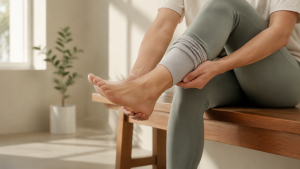
Phase 3 is the foot and ankle work. Now the ankle pumps, toe curls, and foot circles actually have a destination to push the fluid to. Ankle pumps: flex and point the foot. Toe curls: pick up a towel or just scrunch the toes. Foot circles: rotate the ankle.
The key is quality over quantity. Slow, deliberate, full range of motion. I tell my clients to imagine they are squeezing a sponge in their foot. The fluid needs to be pushed out of the foot and up the leg. If you rush through the movements, you're not giving the lymphatic vessels time to respond.
When I first tried this sequence on myself, I was shocked at the difference. I had been doing ankle pumps for years to manage my own swollen feet after long flights. But when I added the breathing and glute activation first, the swelling reduced in half the time. It was a humbling lesson in anatomy.
Modification Tiers: Acute vs. Chronic Swelling
Not all swelling is the same. The Lymphatic Sequence needs to be modified based on the severity and cause of your swelling. I use a tiered approach with my clients to ensure safety and effectiveness.
Tier 1: Acute Swelling (Recent Injury, Post-Surgery)
If you sprained your ankle yesterday or just had surgery, you're in the acute phase. The tissue is inflamed, and aggressive movement can cause more harm. In this tier, we do isometric contractions.
For the foot, that means pressing the sole of the foot against a firm surface without actually moving the joint. For the hip, it's a gentle glute squeeze. The goal is to activate the muscle pump without stressing the healing tissue.
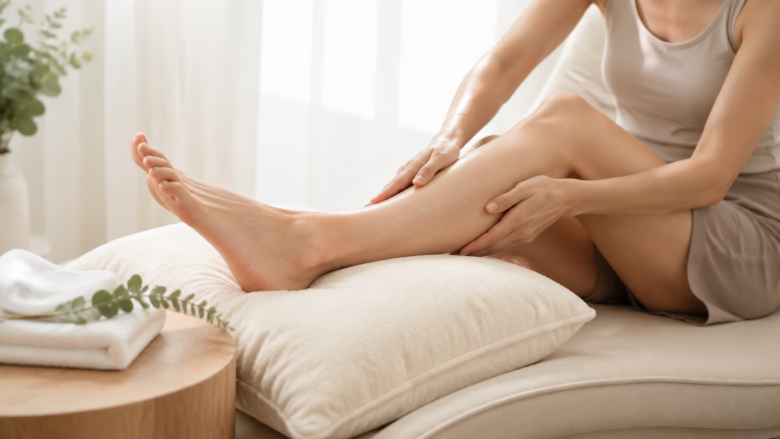
You should also keep the limb elevated above heart level as much as possible. The breathing exercises are still safe and highly recommended. They create the central vacuum that helps pull fluid away from the injured area.
Tier 2: Chronic/Systemic Swelling (Lipedema, Lymphedema, Sedentary Lifestyle)
If you have chronic venous insufficiency, lipedema, or you just sit at a desk for 10 hours a day, you need more repetition and more gravity assistance. In this tier, we might do 20 ankle pumps instead of 10.
We might add a slight incline, like legs up a wall, to use gravity as an ally. We might incorporate walking, but with a specific focus on heel-to-toe gait to maximize the calf muscle pump. The calf is often called the peripheral heart because its contractions are so effective at pumping blood and lymph upward.
For chronic swelling, consistency matters more than intensity. Ten minutes a day, every day, is far more effective than 30 minutes once a week. The lymphatic system responds to regular, rhythmic stimulation.
The 10-Minute Daily Routine
Here is the exact sequence I give my clients. It takes 10 minutes. You'll need a mat or a firm bed, and a wall if you want the gravity assist. If you're just starting out and want a structured way to build this habit, our 30-Day Gentle Movement Plan for Beginners is a great place to start. It walks you through the basics of building a daily practice without overwhelming your system.
- Breathing (2 minutes): Lie on your back, knees bent. Place one hand on your belly. Inhale for 4 seconds, exhale for 6 seconds. Focus on the rise and fall of your belly. Do 10 breaths.
- Glute Bridges (2 minutes): From the same position, press through your heels and lift your hips. Squeeze your glutes at the top for 3 seconds. Lower down slowly. Do 10 reps. Coordinate the squeeze with your exhale.
- Leg Slides (1 minute): Lie on your back with legs extended. Slide one heel toward your glutes, bending the knee. Slide it back out. Alternate legs. Do 10 reps per leg. This activates the hip flexors and quadriceps.
- Ankle Pumps (2 minutes): Lie on your back or sit with legs extended. Flex your toes toward your shin, then point them away. Do 20 slow, deliberate reps. Imagine squeezing fluid out of your foot.
- Toe Curls and Foot Circles (2 minutes): Scrunch your toes as if picking up a towel. Hold for 2 seconds, then release. Then rotate your ankles in circles, 10 in each direction. Move slowly and with intention.
- Calf Stretch (1 minute): Sit with legs extended. Loop a towel around the ball of your foot and gently pull your toes toward you. You should feel a stretch in your calf. Hold for 30 seconds per leg.
This routine is designed to be done in bed before you get up in the morning, or on the floor before bed. The key is consistency. If you miss a day, don't double up the next day. Just start fresh.
When to Expect Results (And What Results Mean)
Don't expect your feet to shrink by an inch after one session. The first thing you'll notice is that they feel lighter. The heaviness and tightness will subside before the physical swelling goes down. This is because you're reducing the interstitial fluid pressure.
Over 2-3 weeks of daily practice, you'll see a measurable reduction in circumference. I usually have clients measure their ankles with a tape measure once a week, not every day, to avoid obsessing over daily fluctuations. If you're using walking as your gentle movement, tracking your steps or distance can be motivating. A simple tool like our Feet to Yards Converter can help you translate your daily steps into distance, giving you a tangible goal to work towards.
It's also important to understand that the lymphatic system is slow. Unlike blood, which circulates in seconds, lymph fluid moves at a snail's pace. This is why the exercises need to be slow and deliberate. You are not doing cardio. You are manually pumping a fluid system that has no central pump.
One thing I tell all my clients: if you have chronic venous insufficiency or lipedema, this routine is not a cure. It's a management tool. You will need to do it consistently to maintain the results. The moment you stop, the fluid will slowly start to re-accumulate. This is not a failure. It's just the nature of the condition.
Frequently Asked Questions
Can I do these exercises with my legs elevated?
Yes, but the breathing and proximal activation are best done lying flat or with knees bent. If you're in a recliner, focus on the breathing and foot circles. Elevation helps, but it's not a substitute for muscle contraction.
Do I need compression socks?
Compression is a fantastic adjunct, but it's not a replacement for movement. The muscle pump is what actually moves the fluid. Compression just prevents it from re-accumulating. I recommend wearing compression socks during the day and doing this routine at night when the socks are off.
Is walking good or bad?
Walking is excellent if you have a good gait. If you're shuffling, you're not engaging the calf pump. Focus on a heel-to-toe gait. Push off with your toes at the end of each step. This maximizes the contraction of the calf muscles.
How long until I see a difference?
Most people feel a difference in the first week. The physical reduction in size usually takes 2-3 weeks. Be patient. The lymphatic system responds slowly to change.
Can I do this if I'm pregnant?
Yes, but you should avoid lying flat on your back after the first trimester. Do the routine sitting in a chair or lying on your side. Always check with your obstetrician before starting any new exercise program during pregnancy.
The Bottom Line on Gentle Movement for Swollen Feet
Gentle movement for swollen feet is not about doing more. It's about doing the right things in the right order. The Lymphatic Sequence - breathe, activate proximally, then move distally - is the most effective way I have found to reduce swelling without aggravating underlying conditions.
Respect the red flags. If your swelling is sudden, one-sided, or accompanied by pain or fever, seek medical help. If it's chronic, use this sequence daily. It's simple, it's safe, and it works.
I've seen clients who were told they would just have to live with swollen feet. After learning this sequence, they were able to reduce their reliance on diuretics, sleep better, and walk without that heavy, tight feeling. It's not magic. It's just anatomy.
Start with the breathing tonight. Do 10 deep breaths before you go to sleep. Tomorrow, add the glute bridges. Build the sequence slowly. Your feet will thank you.