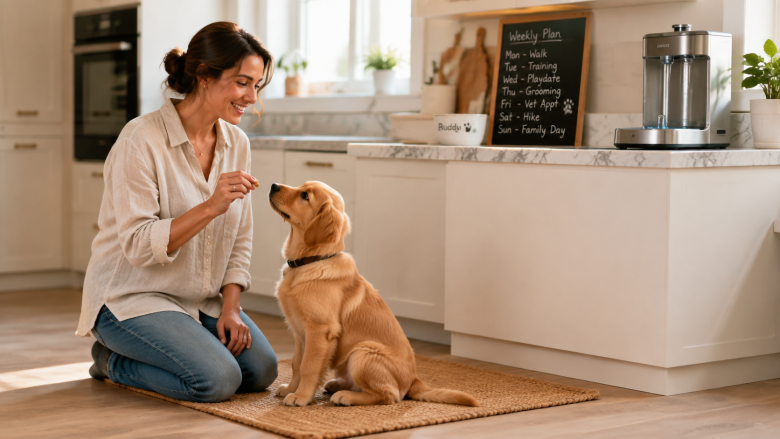
Your Routine Will Fail - Here Is How to Troubleshoot in Real Time
The first thing every new puppy owner needs to hear is that your perfectly planned schedule will fall apart within the first week. Not because you are doing it wrong, but because a puppy is a living creature with its own rhythms, accidents, and opinions. The goal is not to create a rigid timetable that you follow like a drill sergeant. The goal is to build a dynamic contract between you and your puppy - one that adapts to both of your needs, anticipates problems, and recovers gracefully when things go sideways.
In this guide, I will walk you through how to build a routine that actually works for your lifestyle, not just for a hypothetical stay-at-home dog parent. We will cover the first 48 hours, how to read your puppy's cues instead of staring at the clock, how to troubleshoot common issues with a decision tree, and how to shift from newborn-style care to a sustainable adult-dog rhythm. You will leave with a framework you can apply immediately - one that accepts bad days as part of the process.
When I brought home my first puppy, a border collie mix named Juno, I had a color-coded spreadsheet with feeding times, potty breaks every 30 minutes, and training sessions scheduled to the minute. By day three, I had thrown the spreadsheet out the window. Juno didn't care that we were supposed to go out at 7:15 AM - she was still sleeping. And I was exhausted because I had been waking up every two hours all night. The real lesson? A routine is a tool, not a tyrant. It exists to reduce decision fatigue and create predictability, but it must bend around the actual dog in front of you.
The Dynamic Contract: What a Routine Really Is
Think of your routine as a contract with two parties: you and your puppy. You agree to provide food, shelter, potty opportunities, exercise, and mental stimulation at roughly consistent times. In return, your puppy agrees to signal its needs, learn your schedule, and gradually become more independent. But like any contract, there are clauses for unexpected events - a stomach upset, a thunderstorm, a late work meeting. The contract is not voided by these events; it simply gets renegotiated.
Most people miss this nuance because they treat a routine as a one-way street. They read sample schedules online and try to force their puppy into a mold. That approach fails because it ignores the two biggest variables: your puppy's unique temperament and your own daily obligations. A schedule that works for a golden retriever in a house with a fenced yard will not work for a chihuahua in an apartment with a remote-working owner who has back-to-back Zoom calls.
The key is to build a routine that has flexible anchors - fixed times for non-negotiables like meals and bedtime, but flexible windows for everything else. This way, you get the benefits of predictability without the brittleness of a fixed timeline.
Why Fixed Schedules Fail
When you follow a rigid schedule, you start training yourself to ignore your puppy's signals. If the schedule says potty break at 10 AM but your puppy is clearly showing signs of needing to go at 9:45, you might wait. That is a mistake. Puppies have tiny bladders and limited control. The American Veterinary Medical Association notes that a puppy can typically hold its bladder for about one hour per month of age, but that is a rough estimate - individual puppies vary widely. Forcing a puppy to wait just because the clock says so sets up failure.
On the flip side, a completely unstructured day leads to chaos. Puppies thrive on predictability because it lowers their stress. A predictable routine helps with house training, reduces anxiety, and makes it easier for your puppy to settle into your household. The challenge is finding the sweet spot between structure and responsiveness.
The First 48 Hours: Setting the Foundation
The first two days are not about perfect timing - they are about building trust and observing your puppy's baseline. You will be sleep-deprived, and your puppy will be overwhelmed by a new environment. Do not try to impose a full schedule yet. Instead, focus on three things: establishing a safe space, learning your puppy's elimination signals, and setting a bedtime routine.
For the safe space, set up a crate or a pen in a quiet corner. This becomes your puppy's den - a place it can retreat to when overstimulated. Do not use it as punishment. Feed all meals inside the crate, give treats there, and let your puppy nap there with the door open. This creates a positive association that will pay off later.
Next, watch for elimination cues. A puppy that starts circling, sniffing the ground, or suddenly stops playing is about to pee. When you see these signals, pick up your puppy calmly and carry it outside - do not make it walk, because walking might trigger a squat right there. Use a specific word like "potty" or "go outside" every time. Mark the behavior with a treat immediately after the puppy finishes. This is classical conditioning - your puppy will learn that going outside earns a reward.
Finally, set a bedtime routine from night one. Puppies do not have a concept of time, but they do respond to rituals. A predictable sequence - last potty break, a quiet chew, then lights out - signals that the day is over. I learned this the hard way with Juno: the first night she cried for two hours because I had no wind-down ritual. After I introduced a short, calm session of chewing on a frozen Kong followed by a gentle pat, she settled within ten minutes. For a deeper dive on creating a relaxing wind-down, see our guide to building a relaxing bedtime routine - the same principles apply to puppies.
The Mistake Everyone Makes on Day One
Most new owners try to introduce the puppy to every room, every family member, and every piece of furniture within the first hour. That is overwhelming. Your puppy has just left its mother and littermates. It is bombarded with new smells, sounds, and sights. Keep the first 24 hours low-key. Limit the puppy to one room (like the kitchen or living room) where you can supervise. Let it explore at its own pace. Do not have a parade of visitors over. This reduces stress and makes the first night easier.
Another common mistake is giving in to every whimper. Puppies whine for many reasons - they need to potty, they are lonely, they are bored, or they are just practicing. If you respond to every whine by picking the puppy up or giving it attention, you will reinforce that whining works. Instead, use the decision tree below to determine what the puppy actually needs.
The Decision Tree: Troubleshooting in Real Time
You will face three recurring challenges in the first few weeks: potty accidents, whining, and hyper-arousal. Instead of reacting emotionally, use this decision tree to diagnose the root cause and adjust your routine accordingly.
Potty Accident - What to Do
- Did you miss the cue? If you saw the puppy circling but ignored it because you were finishing an email, the routine needs to be more responsive. Shorten the interval between potty breaks, and set a timer if needed. Do not punish the puppy - it has no idea why you are angry.
- Is it a new environment? If the accident happens in a room the puppy has never been in, restrict access until house training is solid.
- Is it a medical issue? If accidents happen frequently despite a consistent schedule, consult your vet. Puppies can get urinary tract infections that require treatment.
When an accident happens, clean it thoroughly with an enzymatic cleaner to remove the scent. Otherwise, the puppy will return to the same spot because it smells like a bathroom. The routine adjustment is to take the puppy out more often, especially after meals, play, and naps.
Whining - Need vs. Drama
Whining is a signal, but not always a distress call. Train yourself to ask: "Is this a need or is this drama?"
- Needs: The puppy needs to potty, is thirsty, or is genuinely scared. If the puppy has been quiet and suddenly starts whining, take it outside immediately. If it just drank water, a potty break is likely.
- Drama: The puppy wants attention, wants out of the crate, or is testing boundaries. If you know the puppy has just been out and has water, the whining is likely attention-seeking. Ignore it. Wait for a moment of silence, then reward the quiet. This is called differential reinforcement of other behavior - you are teaching the puppy that quiet gets attention, not whining.
If the whining continues for more than 15 minutes and you have ruled out needs, consider whether the puppy is overstimulated or needs a nap. Puppies often whine when they are overtired but refuse to nap on their own. Put the puppy in its crate with a chew toy and cover the crate with a light blanket. Many puppies settle within minutes.
Hyper-Arousal - The Zoomies
Every puppy gets the "zoomies" - frantic running, jumping, and mouthing. This usually happens in the evening. The cause is almost always overstimulation or lack of sleep. A puppy that is overtired becomes a tiny Tasmanian devil. The solution is not more play; it is more sleep.
Puppies need 18-20 hours of sleep per day, according to the American Kennel Club. That is a lot. If your puppy has been awake for more than two hours, it is likely overtired. Enforce a nap. Put the puppy in a quiet crate with a puzzle toy or a frozen Kong. Do not engage with the zoomies - that only rewards the behavior. After a 30-60 minute nap, the puppy will return to a calm state.
If the zoomies happen right after dinner, try moving the last meal earlier or splitting it into two smaller meals. A full stomach can trigger a burst of energy. Also, ensure your puppy is getting enough mental enrichment during awake times - a tired brain is as important as a tired body. Short training sessions (5 minutes) and puzzle feeders can help.
Adapting the Routine to Your Lifestyle
The biggest gap in most puppy advice is the assumption that someone is home all day. If you work outside the home, have a commute, or are a single owner, you need a different approach. Let us tackle the most common scenarios.
Remote Work with Meetings
You have the advantage of being home, but you also have the challenge of being unavailable during calls. Structure your day around your meetings. For example, if you have a 9-10 AM standup, take the puppy out at 8:45, feed it, and then put it in a crate or pen with a chew toy. At 10:30, after the meeting, take it out again. The key is to plan breaks around your calendar, not the other way around.
Use a whiteboard or a shared calendar to track potty breaks and naps. Set a timer for every 2-3 hours for a potty break. If you cannot take the puppy out during a meeting, ask a partner or a neighbor to help, or invest in a dog walker for the midday slot. A tired puppy is a quiet puppy - make sure the puppy gets a solid morning play session before your first meeting.
Commuting to an Office
This is the hardest scenario. You will be away for 8-10 hours. No puppy can hold it that long. You need a plan: either come home at lunch, hire a dog walker, or set up a puppy-safe space with pee pads (though pads can confuse house training). The best solution is to have someone come by midday. If that is impossible, consider a doggy daycare for the first few months. Yes, it is expensive, but it is cheaper than replacing your carpet.
When you are home, prioritize quality time. The puppy will sleep a lot. Your evenings should be structured: immediate potty break, dinner, short training session, some play, then wind down. Do not try to fit in all the exercise in one block - split it into two or three sessions.
Partner Split - Dividing Responsibilities
If you share the puppy with a partner, create a schedule that plays to each person's strengths. One person might be a morning person and handle the 6 AM potty break, while the other does the 10 PM bedtime. Write it down and stick to it. The biggest source of conflict is when one person feels like they are doing more. A shared calendar or a simple whiteboard can prevent resentment.
Also, agree on the rules. If one of you lets the puppy on the couch and the other does not, the puppy will get confused. Consistency is more important than who does what.
Reading Puppy Cues vs. Clock-Watching
You will hear advice like "take the puppy out every hour" or "feed at 7 AM exactly." These are starting points, not laws. The more you observe your puppy, the more you will notice its individual rhythm. Some puppies are morning poopers; others need to go after play. Some eat quickly, others graze. Your job is to learn your puppy's language.
Let me give you a specific example. Juno would always scratch at the door when she needed to go out. But she would also scratch when she wanted to go outside to chase leaves. The difference was urgency: a potty scratch was insistent and accompanied by pacing; a play scratch was more casual. Over time, I learned to read the difference. That is the skill you are building - not following a clock, but following your puppy.
That does not mean you should abandon the clock entirely. Use it as a reminder to check in. If the last potty break was two hours ago, proactively take the puppy out even if it is not signaling. But if your puppy is sleeping peacefully, do not wake it just because the schedule says so. Sleep is precious - let the puppy sleep.
A simple rule: if the puppy is sleeping, do not disturb it. If the puppy is awake, assume it needs to go out within 15 minutes. This rule alone will prevent most accidents.
Progressive Independence: From Newborn Care to Adult Rhythm
Your routine should evolve as your puppy grows. In the first month, you are essentially doing round-the-clock care. By three months, the puppy can hold its bladder longer and can start learning to be alone. By six months, most puppies can follow a near-adult schedule.
The key is to gradually increase the intervals between potty breaks and to teach your puppy to settle independently. Start by leaving the puppy alone in a safe space for 5 minutes while you are in another room. Slowly increase the duration over days. This prevents separation anxiety. Many owners make the mistake of never leaving their puppy alone, then wonder why the puppy panics when they go to work.
Also, you can start fading out the middle-of-the-night potty break. When Juno was 10 weeks old, I set a 2 AM alarm. By 12 weeks, she was sleeping through the night. I did this by moving her dinner earlier and ensuring her last potty break was at 11 PM. Each week, I delayed the alarm by 15 minutes. This gradual shift worked much better than suddenly expecting her to hold it for 8 hours.
For your own sanity, build in time for self-care. A puppy is a lot, but you cannot pour from an empty cup. If you are exhausted and stressed, your puppy will sense it. Consider starting a simple 10-minute morning routine for more energy to anchor your day - it will help you stay patient and present with your puppy.
Normalizing Bad Days: When the Contract Breaks
There will be days when everything goes wrong. The puppy pees on the rug, refuses to eat, and whines for hours. You will feel like a failure. This is normal. The contract is not broken; it is just under renegotiation. The worst thing you can do is abandon the routine entirely because one day was bad. That teaches the puppy that chaos is normal.
Instead, treat bad days as data. What triggered the accident? Was it an extra-long walk that changed the schedule? Did you have a visitor that overstimulated the puppy? Did you skip a nap because you were busy? Adjust accordingly. Maybe the puppy needs a shorter walk or an extra nap. Maybe you need to move the meal time. The routine is a living document, not a stone tablet.
I remember a day when Juno was about 4 months old. I had a deadline at work, so I skipped her morning walk and instead gave her a puzzle toy. She was restless all day, chewed up a shoe, and had two accidents. I was furious at myself. But when I looked back, the cause was obvious: she had not burned off energy, so she was anxious. The next day, I prioritized a 20-minute walk before work, and she was calm. The routine did not fail - I had failed to adapt it to her needs that day.
The most important mindset shift is to think of your routine as a feedback loop. You set a schedule, you observe the outcome, and you adjust. You are not trying to achieve perfection; you are trying to achieve consistency with flexibility. That is what makes a routine sustainable for both you and your puppy.
Sample Routine Templates - With Flexibility Built In
To give you a concrete starting point, here are two templates. The first is for someone who is home most of the day; the second is for someone who works away from home. Remember, these are starting points. Adjust based on your puppy's cues.
Template 1: Home-Based (Remote Work or Stay-at-Home)
- 7:00 AM - Potty break immediately upon waking. Then breakfast.
- 7:30 AM - Training session (5 minutes) and play.
- 8:00 AM - Potty break. Then crate time with a chew toy while you start work.
- 10:00 AM - Potty break. Short play session (10 minutes).
- 10:30 AM - Nap in crate (1-2 hours).
- 12:30 PM - Potty break. Lunch for puppy.
- 1:00 PM - Enrichment (puzzle feeder or sniffari game).
- 2:00 PM - Nap.
- 4:00 PM - Potty break. Play session.
- 5:30 PM - Dinner.
- 6:00 PM - Potty break. Short walk if possible.
- 7:00 PM - Quiet time - chew toy or cuddle.
- 8:00 PM - Potty break. Final play session.
- 9:00 PM - Wind down - calm training or gentle massage.
- 10:00 PM - Last potty break. Bedtime.
Template 2: Commuter (8-Hour Workday)
- 6:00 AM - Potty break. Breakfast.
- 6:30 AM - Exercise (walk or fetch) - 20 minutes.
- 7:00 AM - Potty break. Set up puppy in safe space with puzzle toy.
- 12:00 PM - Dog walker comes - 30 minutes of potty and play.
- 5:30 PM - You arrive home. Immediate potty break.
- 6:00 PM - Dinner.
- 6:30 PM - Training session.
- 7:00 PM - Play or walk.
- 8:00 PM - Potty break. Quiet time.
- 9:30 PM - Last potty break. Bedtime.
In both templates, the intervals between potty breaks are 2-3 hours during the day, which matches a 3-4 month old puppy. For younger puppies, shorten the intervals. For older ones, you can stretch them.
The key takeaway is that you are building a framework, not a prison. Your puppy will teach you what works. Listen to it, adjust, and keep going. The routine is a living thing - and so is your bond with your puppy.
If you are struggling with the evening wind-down, revisit the 15-minute evening routine for better rest - it can be adapted for both you and your puppy. A calm owner leads to a calm puppy.
Final Thoughts: The Contract Is a Promise, Not a Guarantee
Building a routine for a new puppy is less about following a schedule and more about creating a shared language. You are teaching your puppy that you will meet its needs, and you are learning to trust its signals. The routine is the scaffolding that holds that relationship together, but it must be flexible enough to bend without breaking.
When you have a bad day, remind yourself that it is part of the process. Every accident, every whine, every zoomie is a data point. Use them to refine your contract. Before you know it, your puppy will be an adult dog, and the routine will have become second nature. You will look back on these chaotic first weeks and laugh - and you will be grateful that you built a routine that could survive real life.
Now go give your puppy a good scratch behind the ears, take a deep breath, and remember: you are doing better than you think.