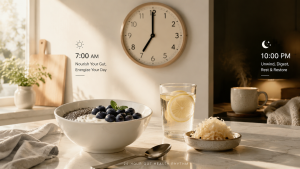
Most exam advice focuses on the mechanics: make a schedule, block time, use the Pomodoro technique, make flashcards. But the real reason your routine keeps collapsing isn't poor time management - it's that you're ignoring your own human needs. The best exam routine isn't a rigid timetable; it's a sustainable system that works with your energy, sleep, and emotions. Here's how to build one that keeps you productive without driving you into burnout.
Why Most Exam Routines Fail (The Missing Piece)
When I was studying for the bar exam, I followed a textbook routine: eight hours of study, two hours of review, one hour of flashcards, all broken into 50-minute blocks. I lasted four days before I hit a wall. I was exhausted, irritable, and my retention had plummeted. The problem wasn't my discipline - it was that I had ignored the two most important variables: my body's natural rhythms and my need for recovery.
Most people design their exam routine like a factory schedule, but your brain isn't a machine. It's a biological organ that requires sleep, movement, and proper fuel to function. The moment you treat studying like an assembly line, you set yourself up for burnout. The solution is to build a routine that prioritizes energy management over time management.
The key to a sustainable exam routine is not studying more - it's studying better by working with your biology instead of against it.
Know Your Chronotype: Build Around Your Energy, Not the Clock
One of the biggest mistakes I see is forcing everyone into the same schedule. But we all have different chronotypes - our internal body clocks that determine when we're most alert. Morning people (larks) peak early, while night owls peak in the evening. If you're a night owl but you force yourself to study at 7 a.m., you'll spend two hours staring at the page before your brain wakes up. That's wasted time.
To find your chronotype, ask yourself: When do you naturally feel most focused? When do you find it easiest to fall asleep? If you're a night owl, don't fight it. Schedule your hardest subjects for your peak hours, even if that means studying from 8 p.m. to midnight. The key is consistency - your brain thrives on a regular schedule that matches your biology.
Morning Person vs. Night Owl: A Quick Comparison
- Morning lark: Wakes easily, most productive before noon, crashes after dinner. Ideal study blocks: 7-10 a.m. and 4-6 p.m.
- Night owl: Struggles to wake early, peaks in late afternoon/evening, gets a second wind after 9 p.m. Ideal study blocks: 4-7 p.m. and 9 p.m.-midnight.
If you're not sure, spend three days tracking your energy levels every hour. You'll quickly see the pattern. Once you know your peak times, you can build your routine around them. This is the foundation of the anti-burnout approach - you stop fighting your body and start partnering with it.
The Energy Audit: Map Your Day Before You Plan It
Before you can build an effective routine, you need to know exactly where your energy goes. Most people guess, but guessing leads to overplanning and underdelivering. Instead, do an energy audit for three days. Use a simple notebook or a spreadsheet, and every hour, rate your focus on a scale of 1 to 10. Also note what you were doing, what you ate, and how much water you drank.
After three days, you'll see patterns. You'll notice that you always hit a slump at 2 p.m., or that you're sharpest after a short walk. This data is gold. It tells you when to schedule deep work, when to do light review, and when to take a break. For example, if your focus drops to a 3 at 2 p.m., don't plan a difficult topic then. Instead, schedule a walk, a nap, or a low-stakes task like organizing notes.
Most people overestimate their willpower and underestimate the power of a well-timed break. The energy audit reveals the truth.
The Anti-Burnout Study Block: Work, Recover, Repeat
Forget the standard 25-minute Pomodoro. That's too short for deep work and too long for a quick break. Instead, use a flexible block that matches your attention span. Most adults can maintain high focus for 45-60 minutes, followed by a 10-15 minute break. But this varies by person and task. Some can do 90 minutes of intense focus; others need to switch every 30 minutes.
Here's a proven pattern: Work for 50 minutes, break for 10 minutes. During the break, do something that actually restores your brain - not scrolling through social media. Stand up, stretch, do a few bodyweight squats, walk around the room, or look out the window. The key is to get your blood flowing and your eyes off the screen. If you want to add a quick mobility routine, our How to Build a Quick Morning Stretch Routine can be adapted for mid-study breaks.
After every two or three blocks, take a longer break of 30 minutes. Go for a walk, eat a snack, or do a quick bodyweight strength session. This isn't wasting time - it's maintaining your energy for the long haul. Research from the National Institutes of Health shows that brief physical activity improves cognitive function and memory retention.
Fuel Your Brain: Nutrition and Hydration for Exam Season
Your brain is an energy hog. It uses about 20% of your daily calories, and it needs the right fuel to function. During exam season, you might be tempted to live on coffee and energy drinks, but that's a recipe for a crash. Instead, focus on steady energy sources: complex carbohydrates (like oatmeal, whole grains, and sweet potatoes), healthy fats (like avocados and nuts), and lean protein (like eggs, chicken, or tofu).
Also, don't underestimate hydration. Even mild dehydration can impair attention and memory. Keep a water bottle on your desk and aim for at least 8 cups a day. And here's a tip that most people miss: eat a balanced breakfast that includes protein. It helps stabilize blood sugar and prevents the mid-morning brain fog. If you're a morning person, consider a quick 10-minute routine to set the tone - our 10-Minute Morning Routine for More Energy can help you start the day right.
Sleep: The Non-Negotiable Foundation
If there's one thing that will make or break your exam routine, it's sleep. Sleep is when your brain consolidates memories - it literally moves information from short-term to long-term storage. Pulling all-nighters might seem like a good idea, but research from the CDC shows that sleep deprivation impairs cognitive function, attention, and decision-making. You're not saving time by staying up; you're sabotaging your ability to learn.
Your routine must include a wind-down period. Create a relaxing bedtime ritual that signals to your body that it's time to sleep. This could include dimming the lights, reading a book, or doing some gentle stretching. Our How to Build a Relaxing Bedtime Routine offers a step-by-step guide. Aim for 7-9 hours of sleep per night, and try to go to bed and wake up at the same time every day - even on weekends. This consistency reinforces your body's natural sleep-wake cycle.
The Restart Protocol: What to Do When You Miss a Day
Let's be honest: you're going to miss a day. Maybe you get sick, maybe a family emergency pops up, or maybe you just have zero motivation. The worst thing you can do is spiral into guilt and tell yourself, "I've ruined everything." That's the burnout mindset. Instead, use the Restart Protocol.
Here's how it works in three steps:
- Forgive yourself. A missed day is not a failure. It's a bump in the road. Guilt only drains your energy.
- Re-enter with a micro-session. Don't try to make up all the lost time. Just do a 5-minute review of your notes. That tiny action breaks the inertia and reminds your brain that you're still in the game.
- Adjust your schedule. If you missed a day, you probably need to shift your plan. Don't cram two days into one. Prioritize the most important topics and let go of the rest.
I remember a week before my final exams, I got a terrible cold and lost three days. Instead of panicking, I used this protocol. I forgave myself, did a 10-minute review, and cut out the lowest-priority chapters. I passed with a solid B+.
Exam Day Routine: From Wake-Up to Pen-Down
The day of the exam is not the day to try something new. Your routine should be so rehearsed that it feels automatic. Here's a plan that works for most people:
- Wake up at your usual time and do a light morning stretch - even just 5 minutes can increase blood flow and reduce anxiety. Our Quick Morning Stretch Routine is perfect for this.
- Eat a balanced breakfast with protein and complex carbs. Avoid sugar - it will cause a crash mid-exam.
- Review your key notes for 10-15 minutes, but don't try to learn anything new. This is just to warm up your brain.
- Do a brief relaxation exercise - take deep breaths, visualize success, or do a quick body scan. This calms your nervous system.
- Arrive early to the exam room. Give yourself time to find your seat and get comfortable.
- During the exam, if you feel anxious, pause for 10 seconds and take a deep breath. Remind yourself that you've prepared for this.
This routine works because it's low-stakes and familiar. You're not adding stress; you're reducing it. And if you're an evening exam person, adapt accordingly - just keep the same principles: familiar, calming, and energizing.
The 4-Phase Exam Cycle: A Framework You Can Reuse
Instead of a one-size-fits-all schedule, think of your exam prep as a cycle with four distinct phases. Each phase has its own focus and routine. This framework helps you avoid burnout because it changes the intensity and type of work over time.
Phase 1: Assessment (Days 1-2)
During this phase, you're not studying - you're planning. Gather your materials, list all topics, and honestly assess your strengths and weaknesses. Set realistic goals for the entire prep period. This phase should take no longer than 48 hours. The routine here is simple: 2-3 hours of sorting and planning per day.
Phase 2: Building (Days 3-10)
This is the heavy lifting. You're learning new material, making notes, and doing practice problems. Use your peak energy times for the hardest subjects, and schedule breaks as we discussed. The routine is your study blocks: 50 minutes on, 10 off, with a longer break every two hours. Aim for 6-8 hours of focused study per day, but listen to your body - if you're dragging, cut back.
Phase 3: Consolidation (Days 11-15)
By now, you've covered most of the material. This phase is about reviewing and testing yourself. Use active recall (practice questions, flashcards, teaching someone else) rather than passive re-reading. Your routine should include daily practice tests and spaced repetition. The intensity increases, but so does your confidence.
Phase 4: Execution (Days 16-20)
The final stretch. You're not learning new things; you're refining your exam technique. Take full-length practice exams under timed conditions. Review your mistakes and focus on weak areas. This phase is as much about mental preparation as it is about knowledge. Your routine should include relaxation exercises and a solid sleep schedule. Our 15-Minute Evening Routine for Better Rest can help you wind down after intense days.
This cycle works because it allows you to ramp up gradually, then consolidate and peak at the right time. It prevents the common mistake of studying too hard too early and burning out before the exam.
Putting It All Together: A Sample Week
Here's a concrete example of what an anti-burnout week might look like for a night owl. Adjust the times based on your own chronotype.
| Time | Activity |
|---|---|
| 11:00 a.m. | Wake up, hydrate, light stretch |
| 11:30 a.m. | Breakfast (eggs, whole-grain toast, fruit) |
| 12:00 p.m. | Review yesterday's notes (30 min) |
| 12:30 p.m. | Deep work: hardest subject (2 x 50-min blocks with breaks) |
| 3:00 p.m. | Lunch and a 30-min walk |
| 4:00 p.m. | Practice problems (2 x 50-min blocks) |
| 6:00 p.m. | Dinner, social time, or light activity |
| 8:00 p.m. | Review and flashcards (1 hour) |
| 9:30 p.m. | Free time, relax |
| 11:00 p.m. | Evening wind-down, read, stretch |
| 12:00 a.m. | Sleep |
Notice that this schedule doesn't have 12 hours of studying. It has about 6-7 hours of focused work, but because it's aligned with the night owl's peak time (afternoon and evening), it's far more effective than a forced 8 a.m. start. The breaks and physical activity keep energy high.
Conclusion: The Routine Is Yours, Not the Other Way Around
The anti-burnout exam routine is not about perfection. It's about building a sustainable system that respects your biology, your energy, and your mental health. You will have off days. You will miss a block or a whole day. That's okay. What matters is that you can restart without guilt and keep moving forward. Remember, the goal is not to study every waking hour - it's to study effectively, retain more, and walk into that exam feeling prepared and calm. So start with an energy audit, find your chronotype, and build a routine that works for you. Your brain (and your grades) will thank you.